Wie man Meeresfrüchte verantwortungsvoll kauft – ohne einen Doktortitel in Meeresbiologie zu benötigen
Nachhaltige Fischerei ist ein komplexes Thema. Die Zertifizierungssysteme sind undurchsichtig, die Kennzeichnungen verwirrend und die Werbung so aufdringlich, dass selbst gutwillige Käufer abschrecken. Hier finden Sie einen praktischen Leitfaden für bessere Entscheidungen, ohne für jeden Einkauf eine Stunde recherchieren zu müssen.
Warum es tatsächlich wichtig ist
Die globalen Fischbestände stehen unter enormem Druck. Laut FAO wird etwa ein Drittel der weltweiten kommerziellen Fischbestände auf biologisch nicht nachhaltige Weise befischt. Diese Zahl steigt seit Jahrzehnten. Die gute Nachricht: Das Kaufverhalten der Verbraucher hat einen messbaren Einfluss darauf, welche Fischereien gefördert, welche Fangmethoden angewendet und welche Arten gezielt befischt werden. Ihre Kaufentscheidungen sind ein kleiner, aber wichtiger Teil dieses Systems.
Ziel ist nicht Perfektion, sondern eine fundierte Entscheidung. Es geht darum, bessere Optionen zu wählen, wenn sie verfügbar sind, Fragen zu stellen, wenn dies nicht der Fall ist, und Lieferanten zu unterstützen, die ihre Beschaffungsprozesse transparent gestalten.
"Man muss sich nicht alle Fischereigebiete merken. Man braucht drei Fragen und einen zuverlässigen Lieferanten."
Die drei wichtigsten Fragen
Wenn Sie Meeresfrüchte kaufen – ob online, beim Fischhändler oder im Supermarkt – helfen Ihnen drei Fragen, den Überblick zu behalten:
Drei Fragen – die Sie jedes Mal stellen
- Wo wurde es gefangen? Land und Region spielen eine Rolle. Wildfänge aus dem Pazifik vor den USA und Kanada unterliegen im Allgemeinen besseren Managementrichtlinien als Importe aus Regionen mit schwächerer Regulierung.
- Wie wurde es entdeckt? Für die Umweltauswirkungen ist die Fangmethode wichtiger als die Fischart. Angelrute, Reusen und Tauchfischen haben die geringsten Auswirkungen. Grundschleppnetzfischerei hat die größten. Langleinenfischerei liegt je nach Beifangmanagement im Mittelfeld.
- Stammt es aus Zucht oder aus freier Wildbahn? Keine der beiden Methoden ist automatisch besser. Gut geführte Muschelzucht (Austern, Miesmuscheln, Venusmuscheln) zählt zu den nachhaltigsten Formen der Proteinproduktion weltweit. Schlecht geführte Garnelenzucht hingegen gehört zu den umweltschädlichsten. Informieren Sie sich, mit welcher Methode Sie es zu tun haben.
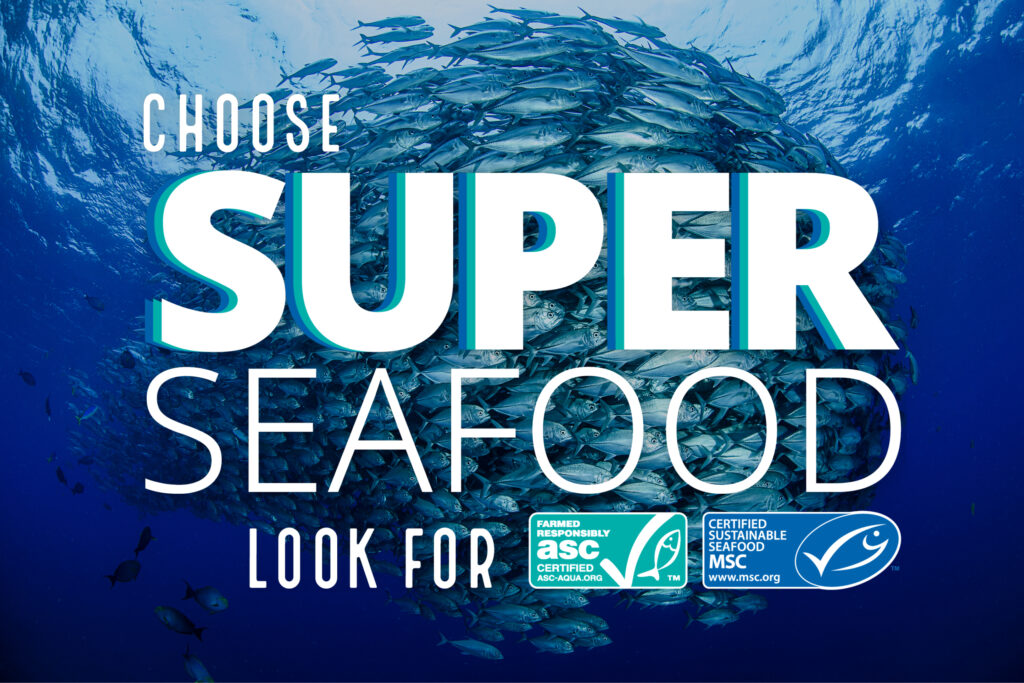
Was die Etiketten tatsächlich bedeuten
MSC (Marine Stewardship Council) ist die strengste unabhängige Zertifizierung für Wildfang-Meeresfrüchte. Sie ist nicht perfekt – der Prüfprozess wurde dafür kritisiert, dass einige fragwürdige Fischereien zertifiziert wurden –, aber als Grundlage ist sie das vertrauenswürdigste Siegel auf dem Markt.
ASC (Aquaculture Stewardship Council) Das ist das Äquivalent für Zuchtfische. Es umfasst Wasserqualität, Auswirkungen auf den Lebensraum, Herkunft des Futters und soziale Verantwortung. Wenn Sie Zuchtlachs, Garnelen oder Tilapia kaufen, lohnt es sich, auf dieses Siegel zu achten.
Delfinsicher Die Kennzeichnung von Thunfischkonserven ist zwar reguliert und insbesondere im Hinblick auf den Delfinbeifang aussagekräftig, sagt aber nichts über die allgemeine Nachhaltigkeit der Fischerei aus. Sie sollte daher nicht als uneingeschränktes grünes Licht verstanden werden.
- Wildlachs aus den USA/Kanada
- Gezüchtete Austern, Miesmuscheln, Venusmuscheln
- Wildgarnelen aus den USA (Golf von Mexiko oder Pazifik)
- Mit der Angel gefangener pazifischer Weißer Thun
- US-amerikanische Zuchtwelse oder -forellen
- Importierte Zuchtgarnelen (nicht verifiziert)
- Atlantischer Heilbutt (überfischt)
- Importierter Gelbschwanz (Herkunft ist wichtig)
- Hai, Schwertfisch (Quecksilber + Beifang)
- Unbeschrifteter "Seebarsch" (oft aus Patagonien)
Die einfachsten nachhaltigen Optionen auf jeder Speisekarte
Schalentiere – Austern, Miesmuscheln, Venusmuscheln, Jakobsmuscheln – sind fast immer eine gute Wahl, wenn sie in Nordamerika oder Europa gezüchtet werden. Sie filtern das Wasser, in dem sie wachsen, benötigen kein Futter und haben eine deutlich geringere CO₂-Bilanz als jede andere Proteinquelle vom Land. Wenn Sie eine dauerhaft positive Entscheidung treffen möchten, essen Sie mehr Schalentiere.
Meeresfrüchtekonserven werden in puncto Nachhaltigkeit oft unterschätzt. Thunfisch aus der Handangelfischerei, Pazifische Sardinen und Wildlachs aus Alaska in Dosen sind allesamt hervorragende Alternativen – umweltschonend, preiswert und wirklich nahrhaft. Die Konservierung in Dosen bedeutet zudem, dass keine Lebensmittel verschwendet werden, was sich in der Gesamtbilanz positiv auswirkt.
Wie wir bei Foods of the Sea unsere Rohstoffe beziehen
Wir wollen Ihnen keine Vorträge über Nachhaltigkeit halten und gleichzeitig unsere eigenen Beschaffungsprozesse im Dunkeln lassen. Jeder Lieferant, mit dem wir zusammenarbeiten, wird hinsichtlich Fangmethode, Herkunftsland und Verarbeitungspraktiken sorgfältig geprüft. Wir bevorzugen Wildfänge aus dem Pazifik bei Fischen und Muscheln aus nordamerikanischen Betrieben. Wenn wir Zuchtprodukte anbieten, stammen diese aus Betrieben, die wir direkt geprüft – nicht nur zertifiziert, sondern auch persönlich besucht haben.
Wenn Sie jemals die Herkunft eines bestimmten Produkts auf unserer Website wissen möchten, fragen Sie einfach. Wir sagen Ihnen genau, woher es stammt.
Meeresfrüchte, die man mit gutem Gewissen genießen kann.
Vollständig nachvollziehbare Herkunft, verantwortungsvolle Fischerei, Lieferung bis an Ihre Haustür.