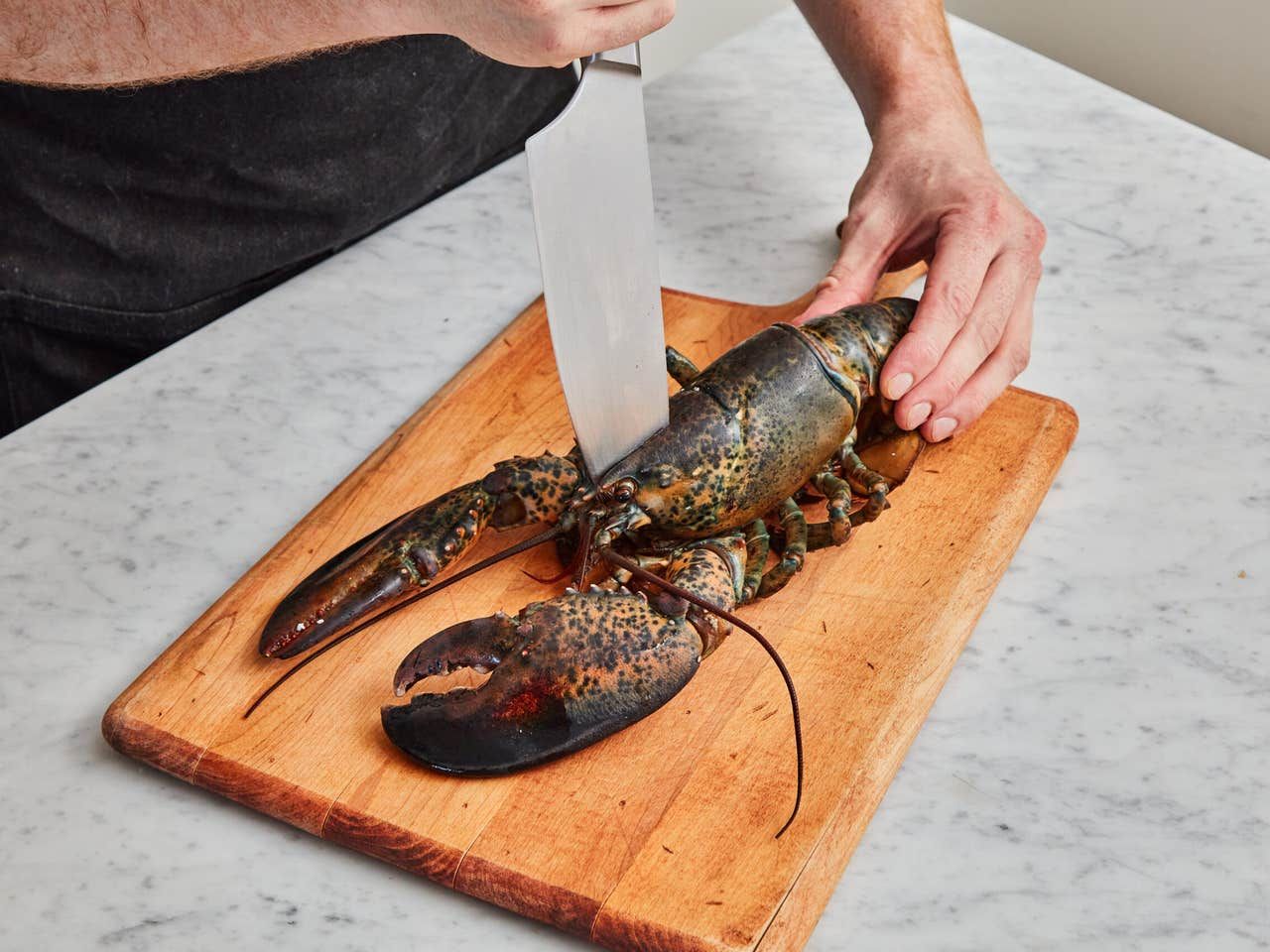
Cuisiner du homard à la maison n'est pas aussi intimidant qu'on le pense.
Il existe un mythe tenace selon lequel cuisiner du homard à la maison est compliqué, salissant et qu'il vaut mieux laisser ce plaisir au restaurant. Après avoir lu ceci, vous comprendrez que ce mythe n'est là que pour vous faire payer le prix fort au restaurant pour quelque chose que vous pouvez préparer en bien meilleure qualité chez vous en moins de 20 minutes.
Choosing Your Lobster
Live whole lobsters are the peak experience but require a bit of confidence to handle. If you’re new to cooking shellfish at home, lobster tails are an excellent starting point — you get all the premium meat, none of the fuss, and they cook consistently every time.
For whole lobsters, look for animals that are actively moving. A sluggish lobster has been in the tank too long and will have less meat and lower quality flavor. At Foods of the Sea, our lobsters are sourced and shipped with freshness as the non-negotiable priority — what arrives at your door is what you’d expect to see in the tank at a great seafood restaurant.
The Two Methods Worth Knowing
Steaming is the method professionals prefer for whole lobsters. It’s gentler than boiling, the meat stays more tender, and you’re not diluting any of the flavor into water. Fill a large pot with about two inches of salted water, bring it to a full boil, add the lobster, cover, and steam for 9 minutes per pound. A 1.5 lb lobster takes roughly 13–14 minutes. The shell turns bright red and the tail meat becomes opaque white — those are your visual cues.
Broiling tails is the weeknight move. Split the shell down the middle with kitchen shears, fan the meat out over the top, brush generously with garlic butter, and broil 4–6 inches from the heat for 8–10 minutes depending on size. You’ll know it’s done when the meat is opaque and slightly charred at the edges. Rest for two minutes before serving.
“Clarified butter with sea salt and lemon is the classic for a reason — it lets the lobster speak.”
The Butter Question
Don’t overthink it. Clarified butter with a pinch of sea salt and a squeeze of lemon is the classic for a reason — it lets the lobster speak. If you want to get creative, try a tarragon brown butter or a chipotle lime compound butter. Both work beautifully. What doesn’t work is drowning the lobster in heavy sauces that mask the sweetness of the meat. That sweetness is what you’re paying for. Protect it.
Steaming — At a Glance
- Fill a large pot with 2 inches of heavily salted water. Bring to a rolling boil.
- Add the live lobster head-first. Cover immediately.
- Steam 9 minutes per pound — 13–14 min for a 1.5 lb lobster.
- Shell is bright red. Tail meat opaque white. You’re done.
- Rest 2 minutes. Serve with clarified butter.
A Word on Timing
Overcooked lobster is rubbery and sad. If you’re unsure, pull it slightly early — carryover heat does the rest while it rests. You can always return it to the heat for another minute. You cannot un-overcook a lobster.
Get restaurant-quality lobster delivered.
Live whole lobsters and split tails — shipped directly to your door.