How to Buy Seafood Responsibly — Without Needing a PhD in Marine Biology
Sustainable seafood has a complexity problem. The certification systems are Byzantine, the labels are confusing, and the marketing is loud enough to make even well-intentioned buyers give up. Here's a practical guide to making better choices without spending an hour researching every purchase.
Why It Actually Matters
Global fish stocks are under genuine pressure. Roughly a third of the world's commercial fish stocks are harvested at biologically unsustainable levels, according to the FAO. That number has been climbing for decades. The good news: consumer purchasing behavior has a measurable effect on which fisheries get funded, which methods get used, and which species get targeted. Your buying decisions are a small but real part of the system.
The goal isn't perfection — it's informed preference. Choosing better options when they're available, asking questions when they're not, and supporting suppliers who make the sourcing transparent.
"You don't need to memorize every fishery. You need three questions and one reliable supplier."
The Three Questions Worth Asking
When you're buying seafood — whether online, at a fishmonger, or in a grocery store — three questions cut through most of the noise:
Three Questions — Ask Every Time
- Where was it caught? Country and region matters. Pacific wild-catch from the US and Canada is generally better managed than imports from regions with weaker regulatory oversight.
- How was it caught? Method matters more than species for environmental impact. Pole-and-line, trap, and dive methods are lowest impact. Bottom trawling is highest. Longline sits in the middle depending on bycatch management.
- Is it farmed or wild? Neither is automatically better. Well-managed shellfish aquaculture (oysters, mussels, clams) is among the most sustainable protein production on Earth. Poorly managed shrimp farming is among the most destructive. Know which you're dealing with.
What the Labels Actually Mean
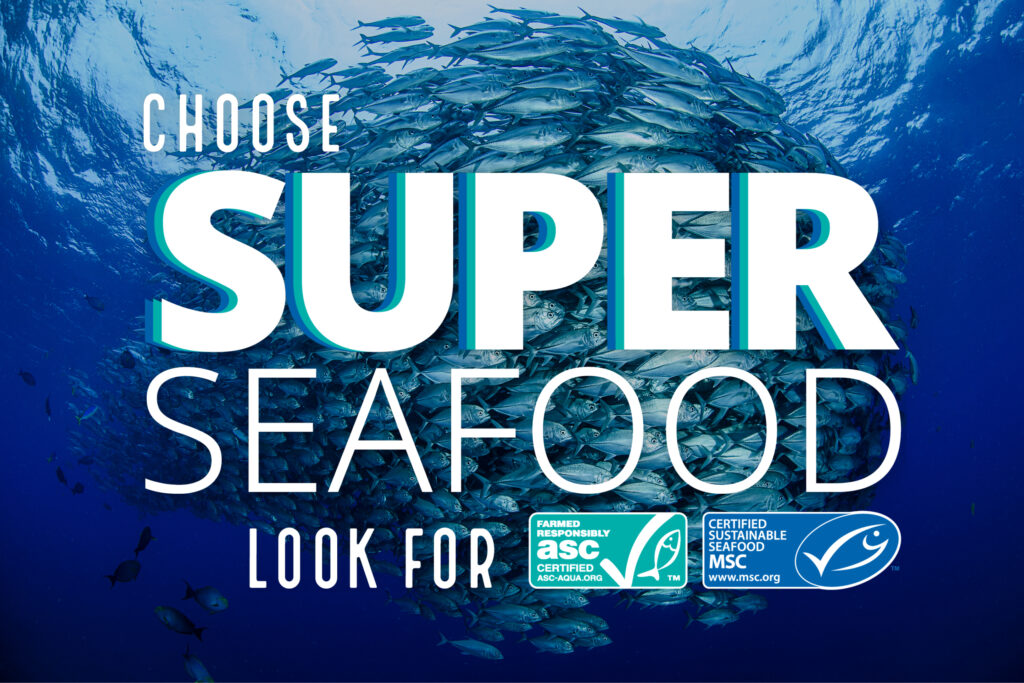
MSC (Marine Stewardship Council) is the most rigorous independent certification for wild-caught seafood. It's not perfect — the audit process has been criticized for certifying some questionable fisheries — but as a baseline it's the most trustworthy label on the market.
ASC (Aquaculture Stewardship Council) is the farmed equivalent. It covers water quality, habitat impact, feed sourcing, and social responsibility. If you're buying farmed salmon, shrimp, or tilapia, this label is worth looking for.
Dolphin-safe labels on canned tuna are regulated and meaningful for dolphin bycatch specifically, but say nothing about the broader sustainability of the fishery. Don't treat it as a comprehensive green signal.
- US/Canadian wild-caught salmon
- Farmed oysters, mussels, clams
- US wild shrimp (Gulf or Pacific)
- Pole-caught Pacific albacore tuna
- US farmed catfish or trout
- Imported farmed shrimp (unverified)
- Atlantic halibut (overfished)
- Imported yellowtail (origin matters)
- Shark, swordfish (mercury + bycatch)
- Unlabeled "sea bass" (often Patagonian)
The Easiest Sustainable Choices on Any Menu
Shellfish — oysters, mussels, clams, scallops — are almost universally a good choice when farmed in North America or Europe. They filter the water they grow in, require no feed inputs, and have a carbon footprint far below any land-based protein. If you're trying to make one consistent positive choice, eat more shellfish.
Canned seafood is underrated on the sustainability front. Pole-and-line skipjack tuna, Pacific sardines, and wild Alaskan salmon in cans are all excellent options — low impact, affordable, and genuinely nutritious. The canning format also means zero food waste, which matters in the full accounting.
How We Source at Foods of the Sea
We're not going to lecture you about sustainability and then leave our own sourcing opaque. Every supplier we work with is vetted for fishing method, country of origin, and handling practices. We prioritize wild-caught Pacific species for finfish and North American shellfish operations for bivalves. When we offer farmed product, it comes from operations we've investigated directly — not just certified, but visited.
If you ever want to know the origin of a specific product on our site, ask. We'll tell you exactly where it came from.
Seafood you can feel good about.
Fully traceable sourcing, responsible fisheries, delivered to your door.