
Everything You Need to Know Before You Order Your First Oysters
Oysters have a reputation for being intimidating — the shucking, the slurping, the mythology around months with an "R." Most of that reputation is unearned. Oysters are one of the simplest, most sustainable, and most rewarding things you can eat. Here's how to get comfortable with them fast.
Why Oysters Taste So Different From Each Other
An oyster's flavor — what sommeliers call its "merroir" — is entirely a product of the water it grew in. Temperature, salinity, mineral content, algae species, tidal movement: all of it ends up in the shell. A cold, high-salinity Atlantic oyster from the coast of Maine tastes nothing like a briny Pacific oyster from Washington State, which tastes nothing like a mild, creamy Gulf oyster from the warm shallow waters of Louisiana.
This is what makes oysters genuinely interesting rather than just a status food. The geography is edible. You're tasting a specific place at a specific time of year.
- Clean, briny, mineral finish
- Firm, chewy texture
- High salinity — bold flavor
- Best raw or with mignonette
- Examples: Wellfleet, Blue Point
- Sweet, cucumber finish
- Plump, creamy texture
- Lower salinity — mellow flavor
- Great for beginners
- Examples: Kumamoto, Shigoku
The "R Month" Rule — Is It Real?
The old rule — only eat oysters in months containing the letter R, which excludes May through August — has a kernel of truth wrapped in a lot of outdated logic. Historically, warmer months brought higher bacterial risk and left oysters spawning and thin. Modern refrigeration and aquaculture have eliminated most of that concern. Farmed oysters in particular are harvested to order and don't have the same seasonal quality drop.
The one thing that hasn't changed: oysters in summer months can taste slightly milky or soft due to spawning. If you prefer the firm, briny experience, the months with an R genuinely do tend to deliver a better oyster. But it's a preference issue now, not a safety issue.
"The geography is edible. When you eat an oyster, you're tasting a specific place at a specific time of year."
How to Shuck Without Injuring Yourself
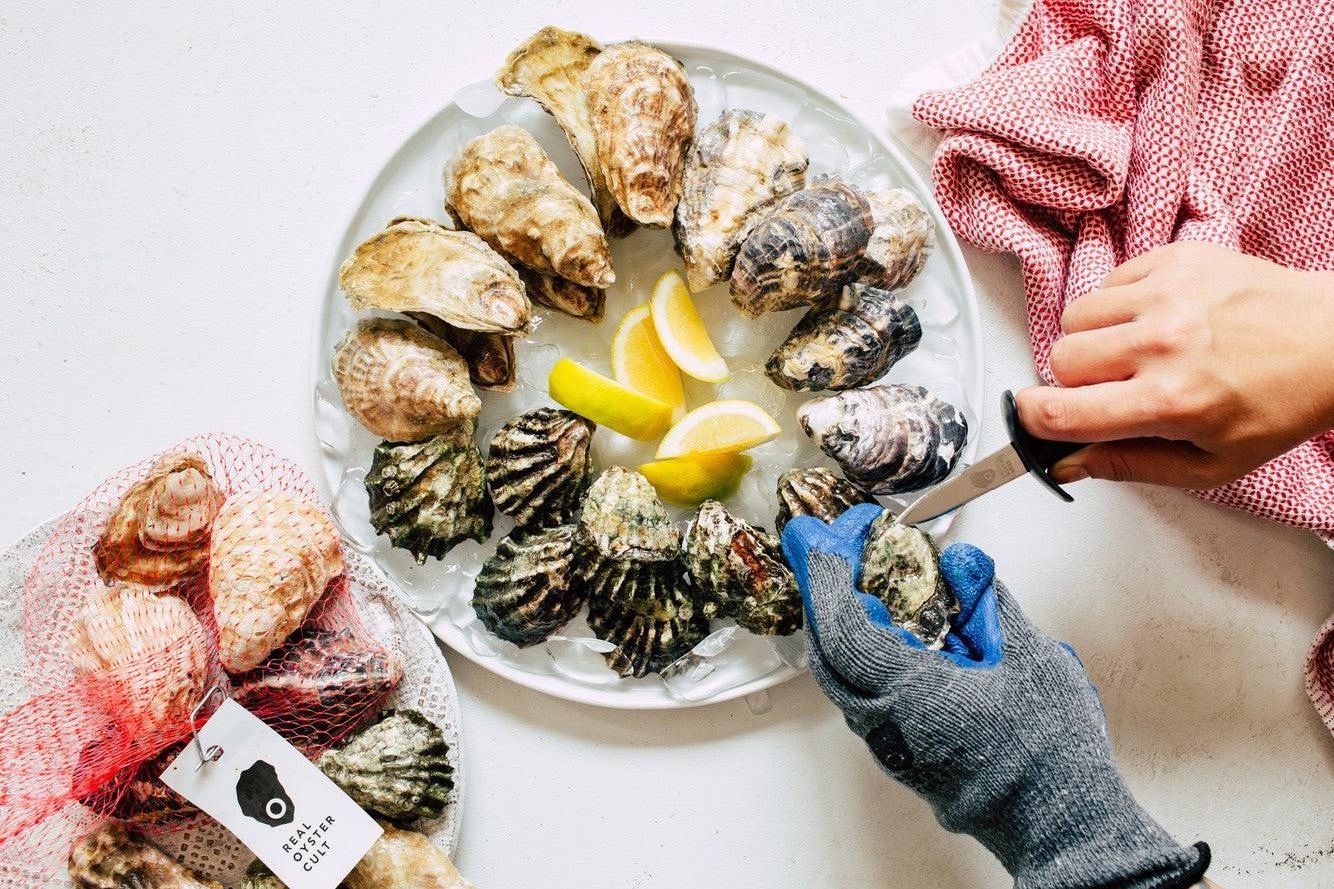
The towel is the most important piece of equipment. Wrap it around the oyster so your hand is protected if the knife slips. Hold the oyster flat-side up. Insert the oyster knife into the hinge at the narrow end — not the lip. Apply firm, twisting pressure rather than stabbing force. Once the hinge pops, slide the knife along the top shell to sever the muscle, then again along the bottom to free the oyster from its shell completely. Keep it level so you don't lose the liquor.
Shucking — Step by Step
- Fold a thick kitchen towel into a pad. Set the oyster flat-side up inside it, hinge pointing toward you.
- Insert the oyster knife tip into the hinge. Wiggle firmly — don't stab.
- Twist the knife like a key turning. The hinge will pop open.
- Slide the knife along the inside of the top shell to sever the adductor muscle. Discard the top shell.
- Slide the knife under the oyster to cut the bottom muscle. Keep the shell level — protect that liquor.
- Check for shell fragments. Serve immediately on ice with lemon or mignonette.
What to Serve With Them
Less is more. A classic mignonette — minced shallot, cracked black pepper, and red wine vinegar — is the move for briny East Coast oysters. A squeeze of fresh lemon on a Kumamoto. Tabasco if you must, but sparingly. What you're trying to taste is the oyster. Anything that overpowers that flavor is working against you.
For cooked preparations, try oysters Rockefeller — topped with spinach, butter, and breadcrumbs and broiled until just set — or grilled in the shell with a compound butter. Heat opens up sweetness in the meat that raw doesn't reveal.
Fresh oysters shipped to your door.
East Coast and West Coast varieties — live, packed on ice, ready to shuck.