
Salmon Twice a Week: What It Actually Does to Your Body
The American Heart Association recommends eating fish — particularly fatty fish — at least twice a week. Most people nod along and keep ordering chicken. Here's what they're leaving on the table, and why salmon specifically is in a category of its own.
The Omega-3 Argument, Made Simple
Omega-3 fatty acids are essential fats — meaning your body cannot manufacture them, so every gram has to come from what you eat. EPA and DHA, the two forms found in fatty fish, are the ones that actually matter clinically. They reduce triglyceride levels, lower systemic inflammation, support brain function, and have a well-documented association with reduced risk of cardiovascular events.
Salmon is the single most efficient delivery vehicle for EPA and DHA in the human diet. A 6oz fillet of wild-caught salmon delivers between 3,000 and 4,000mg of combined EPA and DHA — several times more than a typical fish oil capsule, and in a form your body absorbs more readily.
"A 6oz wild salmon fillet delivers more Omega-3s than most people get in a week of supplements."
Wild vs. Farmed — Does It Matter?
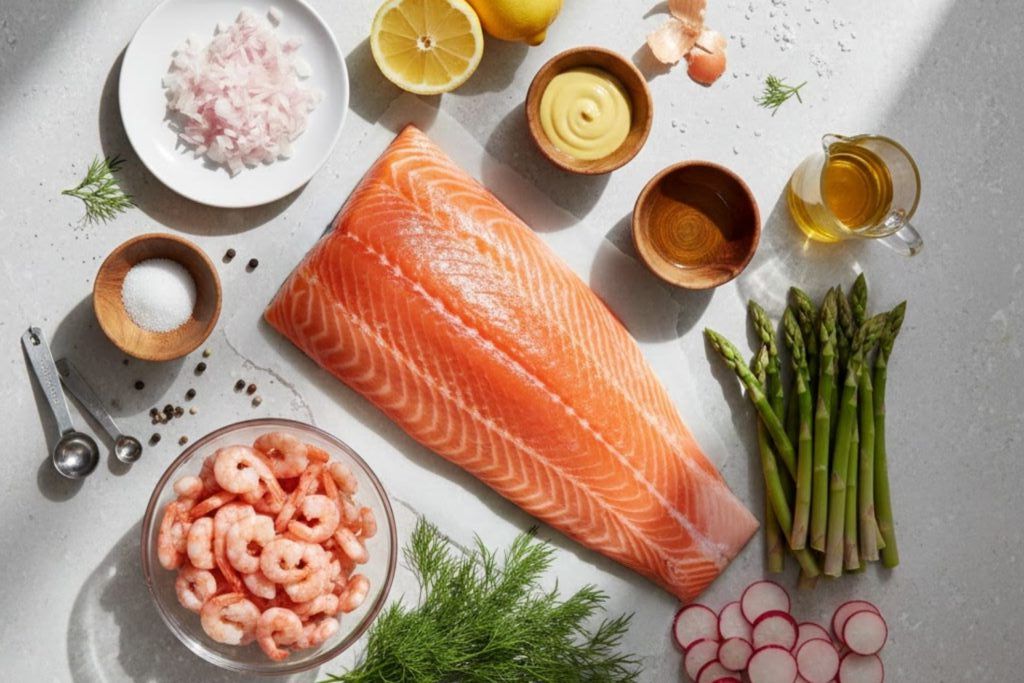
Yes, though not as dramatically as the internet would have you believe. Wild-caught salmon — Pacific species like Sockeye, King, and Coho — have a naturally leaner muscle profile and a diet of krill and small fish, which produces a higher ratio of Omega-3 to Omega-6 fats. Their flesh is deeper in color and more intensely flavored.
Farmed Atlantic salmon is fattier overall, with more Omega-3s in raw numbers but a less favorable Omega-3 to Omega-6 ratio. It's still nutritionally excellent. The bigger concern with farmed salmon is antibiotic use and dye supplementation in lower-grade operations — both of which are non-issues with reputable suppliers. At Foods of the Sea, we source from operations we'd stake our name on.
| Nutrient | Wild Sockeye (6oz) | Farmed Atlantic (6oz) |
|---|---|---|
| Omega-3 (EPA + DHA) | ~3,200mg | ~4,000mg |
| Protein | 34g | 30g |
| Calories | 240 kcal | 350 kcal |
| Vitamin D | 700–900 IU | 500–700 IU |
| Astaxanthin | High (natural) | Variable |
The Best Ways to Cook It Without Losing the Benefits
Heat degrades Omega-3s, but only meaningfully if you're charring or frying at very high temperatures for extended periods. Pan-searing skin-side down, baking at 375–400°F, or gentle poaching all preserve the nutritional profile while giving you a great result. The skin is worth keeping — it protects the fat-rich flesh during cooking and crisps beautifully if the pan is hot and dry.
Perfect Pan-Seared Salmon — The Method
- Pat fillets bone-dry with paper towel. Any moisture = no crust.
- Season flesh side only with salt and pepper. Leave skin bare.
- Heat a stainless or cast iron pan over medium-high until it shimmers.
- Add 1 tbsp avocado oil. Place salmon skin-side down immediately.
- Press gently for 10 seconds so the skin makes full contact. Don't move it.
- Cook skin-side down for 4–5 minutes until skin is crisp and flesh is 70% opaque up the sides.
- Flip. 60–90 seconds on the flesh side. Pull off heat. Rest 2 minutes.
What Twice a Week Actually Looks Like
Two 6oz servings a week — roughly 12oz total — is the clinical recommendation and also a very achievable grocery target. That's a midweek dinner and a weekend meal. It doesn't need to be elaborate: a pan-seared fillet over greens on Tuesday, a baked salmon with roasted vegetables on Saturday. The nutrition stacks up quietly in the background while you eat food that actually tastes like something.
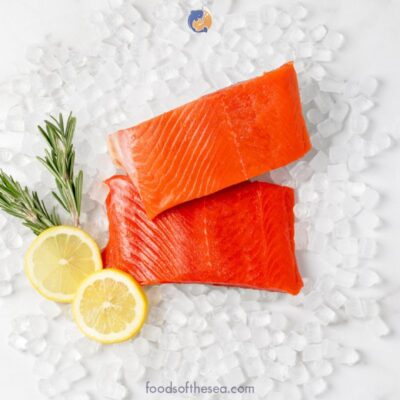
Wild-caught salmon, delivered.
Sockeye, King, and Coho — individually vacuum-sealed and flash-frozen at the source.