How to Cook Fish Straight From the Freezer — No Thawing Required
Forgot to thaw dinner? Good news — with fish, that's rarely a problem. Cooking straight from frozen isn't a compromise; for most cuts, it's simply a different technique with its own advantages. Here's how to get it right every time.
Skip the Thaw, Skip the Stress
Most people assume frozen fish needs to sit in the fridge overnight before it's dinner-ready. In practice, the oven, a skillet, or a steamer basket can take a fillet from freezer to plate in about the same time it takes to steam some rice and toss a salad.
The reason this works: fish is thin and cooks quickly regardless of its starting temperature. A dense roast needs hours to thaw evenly, but a 6-ounce fillet only needs a bit of extra time and slightly gentler heat to go from solid to perfectly cooked.
"The fish doesn't care that it started the day frozen. It cares about heat, time, and moisture — get those three right and the rest takes care of itself."
The One Rule That Matters Most
Whatever method you choose, the same principle applies: lower heat, more time, patience with the center. A frozen fillet cooked at the same aggressive heat you'd use on thawed fish will scorch on the outside long before the middle catches up. Drop the temperature slightly, add roughly a third more cooking time, and check doneness with a thermometer rather than a clock.
Cooking From Frozen — Quick Reference
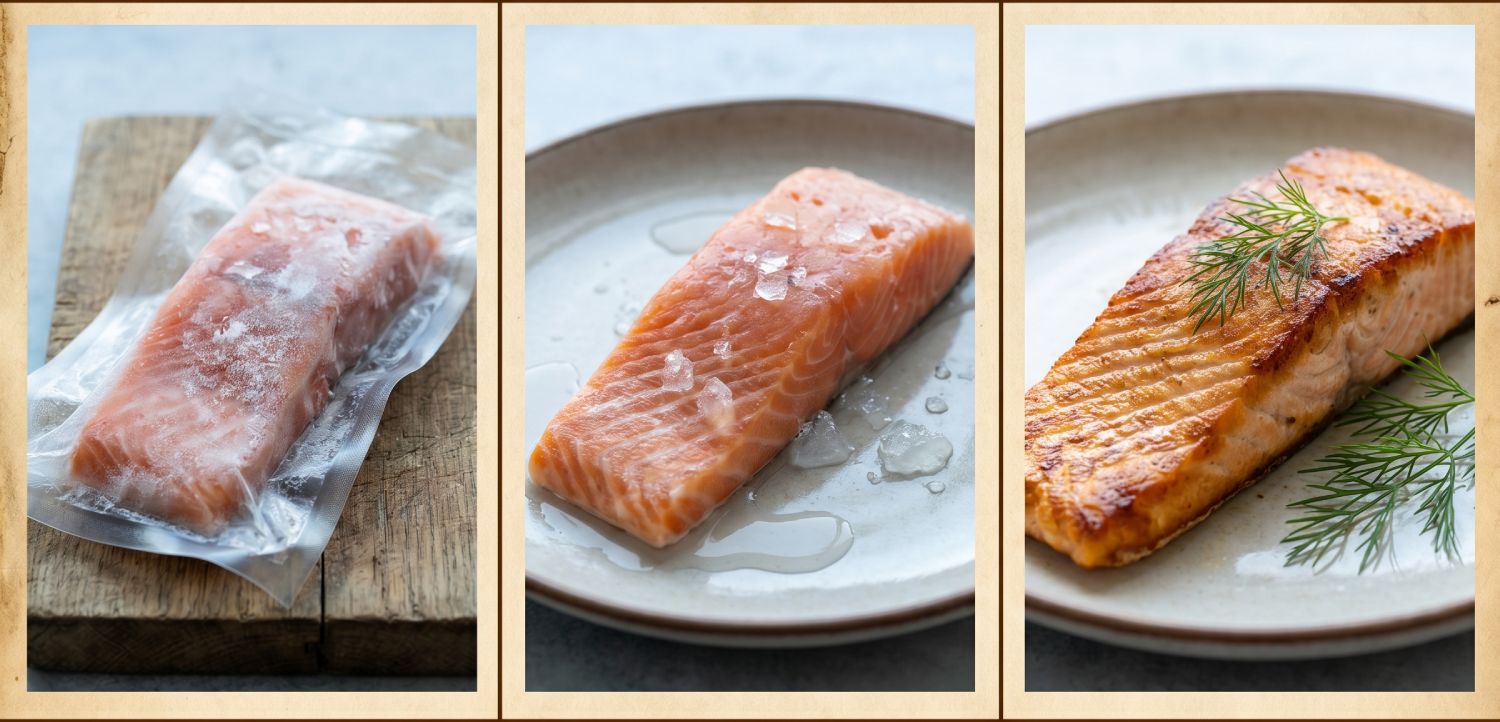
- Skip the rinse, keep the wrap on until the last second. Unwrap right before cooking so the surface stays as dry as possible — wet fish steams instead of browning.
- Season after the ice melts, not before. Salt and spices slide right off a frozen surface. Wait until the first few minutes of cooking soften the exterior, then season.
- Pull it early and let carryover finish the job. Fish keeps cooking for a minute or two after it leaves the heat. Aim for the low end of your target temperature.
Picking the Right Method for the Cut
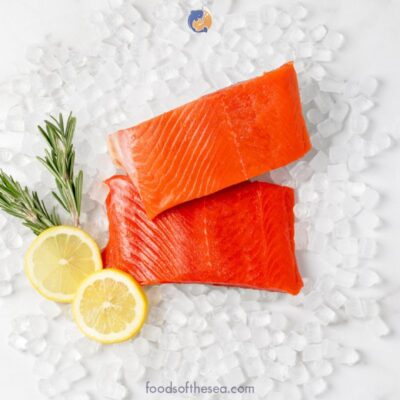
Not every technique suits every fillet. Thin, delicate fish like sole or thin salmon portions do best with gentle, enclosed heat — think foil packets or a covered pan — where trapped steam keeps things moist while the center finishes. Thicker cuts like halibut steaks or a full salmon fillet handle dry heat better, since there's more mass to protect the surface from overcooking before the middle catches up.
If you're after crisp, restaurant-style skin, that's the one job better suited to a fillet that's had a few minutes to soften first — a quick rinse under cool water strips away just enough surface ice to help it sear instead of steam.
- Oven-baked fillets
- Foil packet dinners
- Steamed or poached fish
- Soups and chowders
- Fish cakes (flake after a quick simmer)
- Pan-seared, crispy-skin fillets
- Direct grilling on open grates
- Breaded or battered preparations
- Thin fillets under half an inch
- Anything served raw or rare
Reading Doneness Without Guesswork
Because starting temperature varies so much with frozen fish, time alone is an unreliable guide. A cheap instant-read thermometer removes the guesswork entirely — most salmon is at its best pulled in the mid-120s°F, while flakier white fish like cod or halibut wants to land a bit higher, in the low 130s°F. If you don't have a thermometer handy, gently press the thickest part with a fork: it should separate into clean flakes without any translucent, glassy center remaining.
How Our Fish Is Built for This
Every portion we sell is individually packed and frozen at peak freshness, which is exactly what makes cooking from frozen so reliable. There's no guesswork about how long a piece has been sitting around or how evenly it will thaw — you're working with a consistent, single-serving cut every time. Grab what you need, leave the rest in the freezer, and skip the thawing step entirely on busy nights.
Dinner from the freezer, done right.
Individually portioned, flash-frozen seafood — no thawing required.